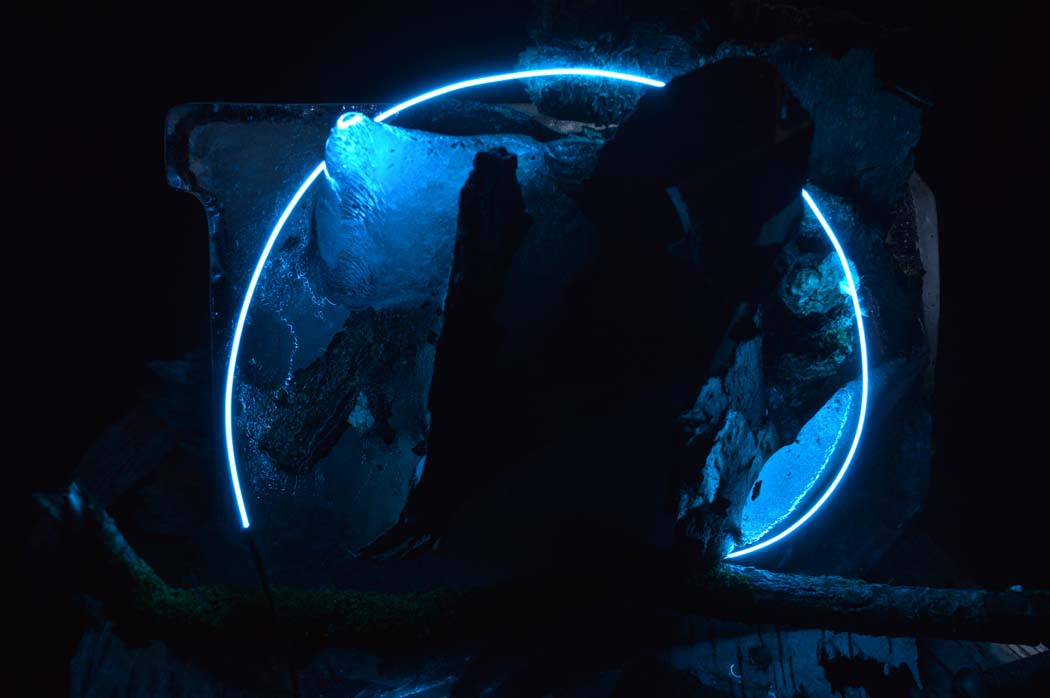
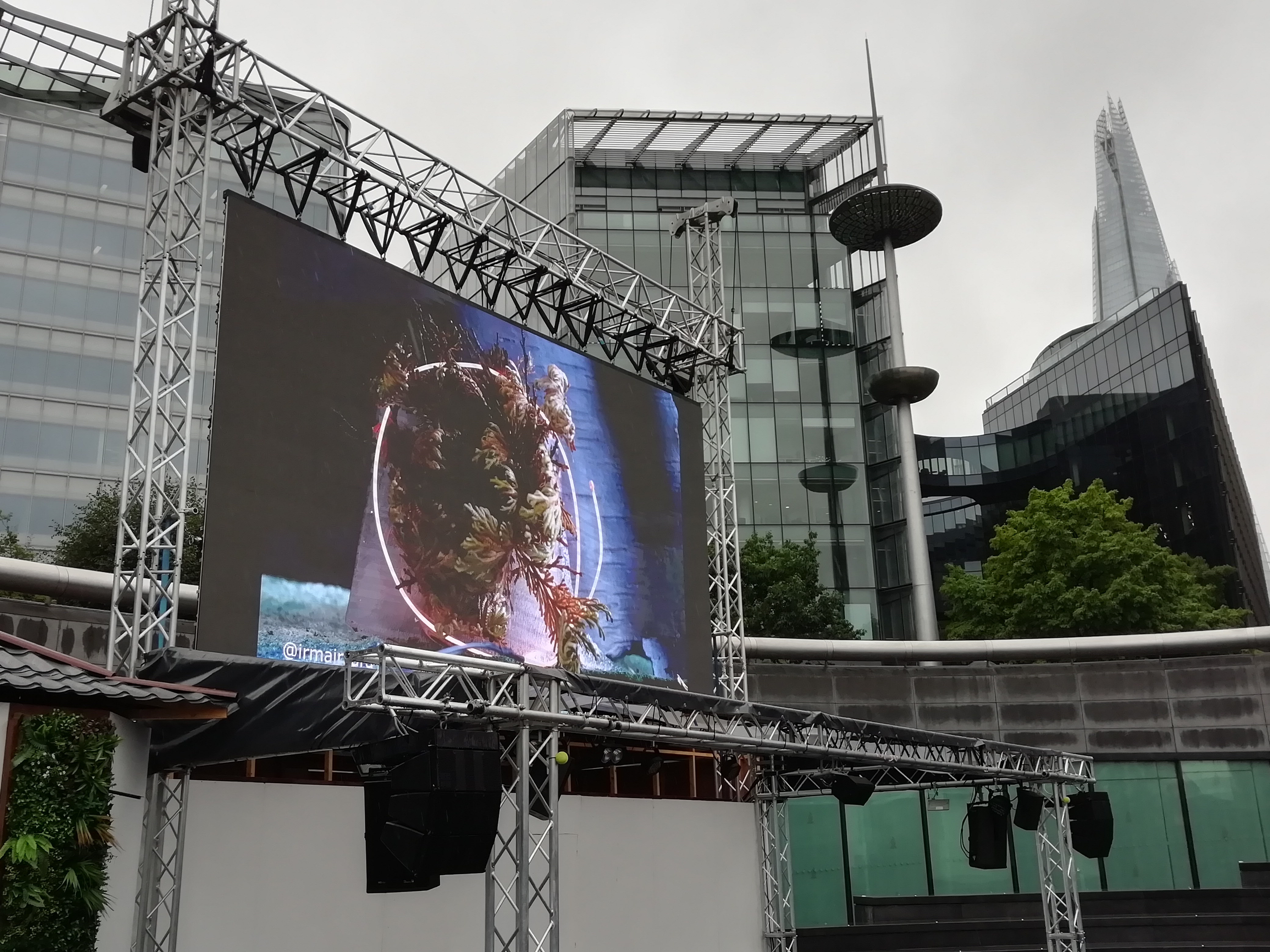
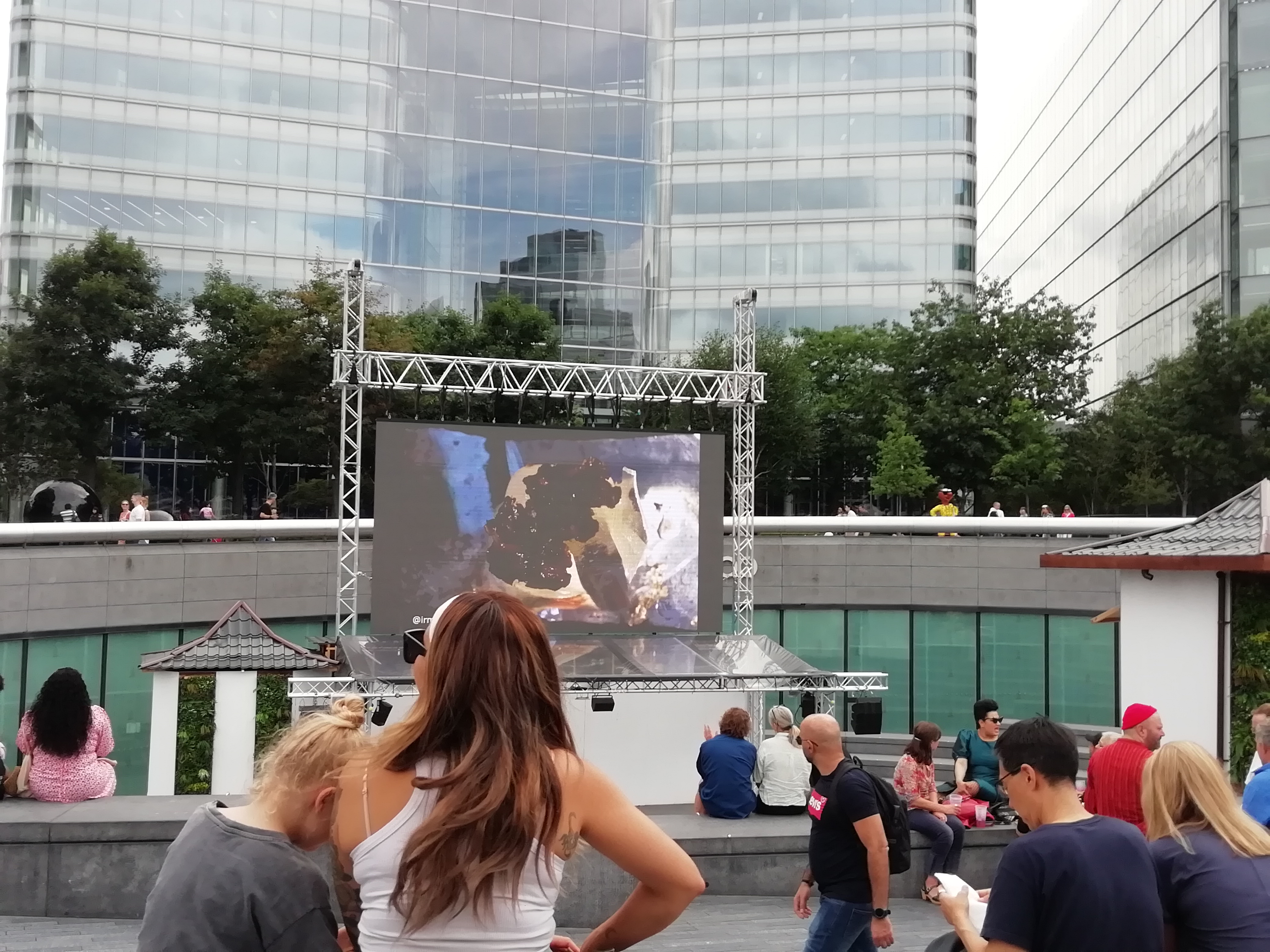
My first three films relating to the environment – Monster Soup, Desert Rose and Metamorphosis – will be among a number of short films shown on rotation throughout the day at The Scoop sunken amphitheatre as part of In a field by a Bridge, organised by Team London Bridge. The soundscapes for all of the videos were created by Jonathan Lambert.
The festival celebrates everything that Potters Fields Park and the London Bridge neighbourhood have to offer as a leading environmentally- focused business district, highlighting the transition to a carbon neutral economy, low impact living and healthy lifestyles. The impact of this festival on the local community, is aimed to create positive social and economic longevity far beyond this launch weekend.
Saturday, 22 July – Sunday 23 July 2023
12:00 17:00
THE SCOOP, 2A More London Riverside, London SE1 2DB
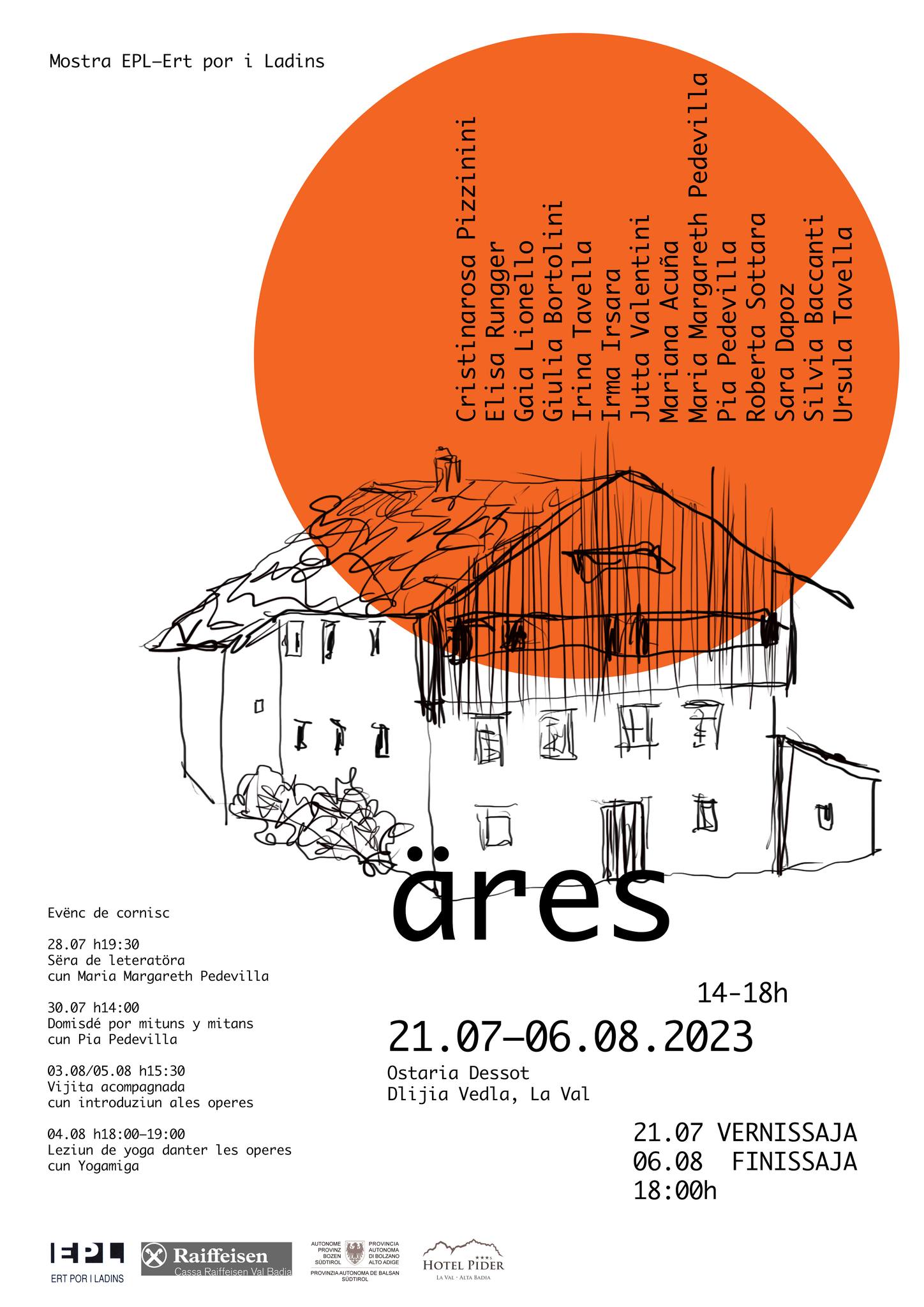
I’m very pleased to be participating in äres, a exhibition of the work of fourteen women associated with the ladino-speaking area of Val Badia (BZ) in Italy.
It’s very significant for me to return to my roots to show my climate-change film Metamorphosis in this special venue, which is less than a kilometer from my family home in the Dolomites. The region has seen significant events in recent years due to climate change, including the collapse of the Marmalada glacier in 2022 or Storm Vaia in 2018 which caused massive damage to the mountain ecosystem, knocking down about eight million cubic metres of timber,
The exhibition is sponsored by EPL – Ert por i Ladins ODV as well as Raiffeisen, Provinia Autonoma di Bolzano and Hotel Pider.
The soundtrack for the video was created by musician and composer Jonathan Lambert.
14 artistes dla Val Badia é arjignades y s’inviëia
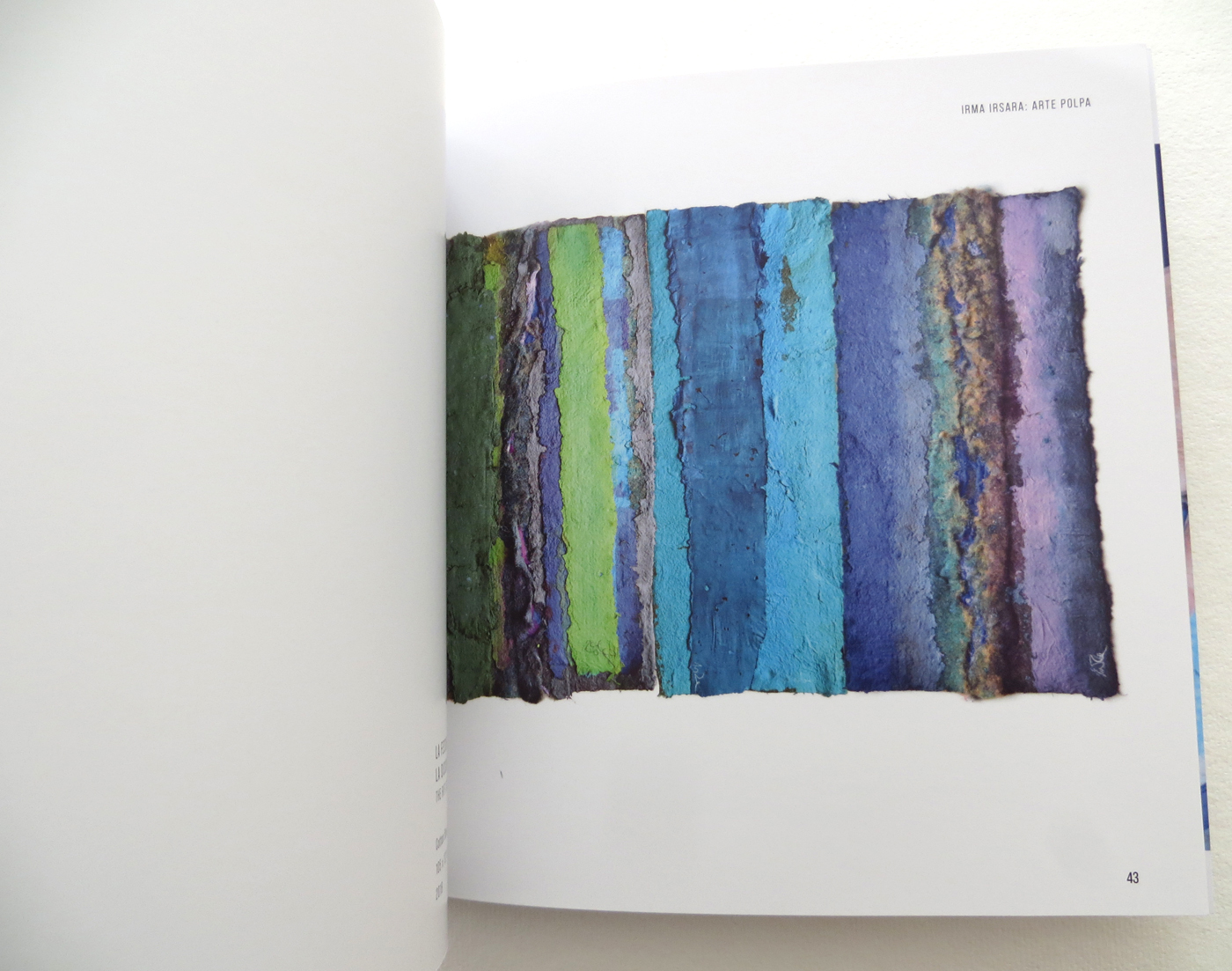
There is a vibrancy to the work of artist Irma Irsara (b.1961, Italy). Shades of bright red, turquoise and blue draw the eye towards the natural materials onto which pigment dyes are embedded. Remnants of pure cotton cloth and fallen bark are incorporated into bold statements of abstract colour. Stand before these images and you experience an energetic force that evokes at once curiosity and contemplation.
Irsara explores issues concerning our natural environment and the way in which we are connected to it. Her lyrical abstract compositions are formed out of found organic materials such as waste cotton fibres and storm debris that she picks up on her travels and intuitively transforms into a vibrant mix by adding pigment dyes in a sort of magical alchemical process.
Inspired in part by the works of the Italian “arte povera” movement of the late 1960s and 1970s, these organic materials are at the core of Irsara’s art and similarly make reference to the natural environment, acting as a statement against mass-market consumerism. Irsara favours the essential nature of life as those artists did through their choice of worthless materials such as bits of wood, rags and scraps of newspaper from where the actual creative process has more significance than a finished object. Irsara rejects the consumerist product in favour of a raw-edged, natural, unfinished art that evokes the real, the instinct and the ephemeral.
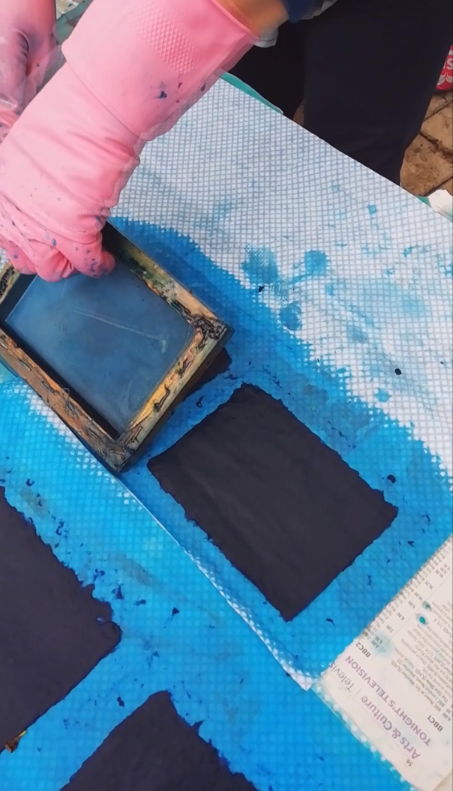
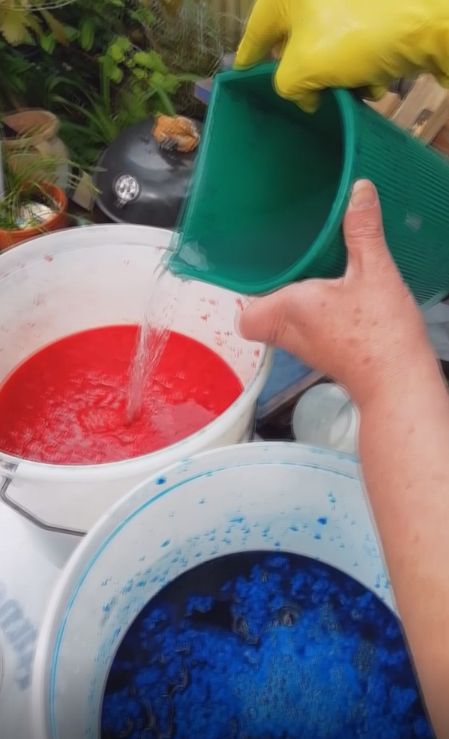
Colour is key to Irsara’s work, and though flat, there is a depth to these abstract works. The eye is drawn into the essence of the work and yet allowed to drift along the rough contours and unfinished edges, beckoning a sort of unpredictability, reminiscent of nature itself. In contrast to the natural brown tones of the earth, the artist calculates exactly a weight and intensity of colour by using a special technique that is akin to the process of paper making. The “arte polpa” process is a term created by the artist and refers to a technique that uses layers upon layers of cotton fibre pulp, pressed down by hand, wet on wet, using a hand mould and deckle process. The artist pushes down on the natural texture of the pulp, creating batches of similar colours to create a basic palette, and to which she occasionally adds a quantity of pure, fibre-reactive pigment dyes.
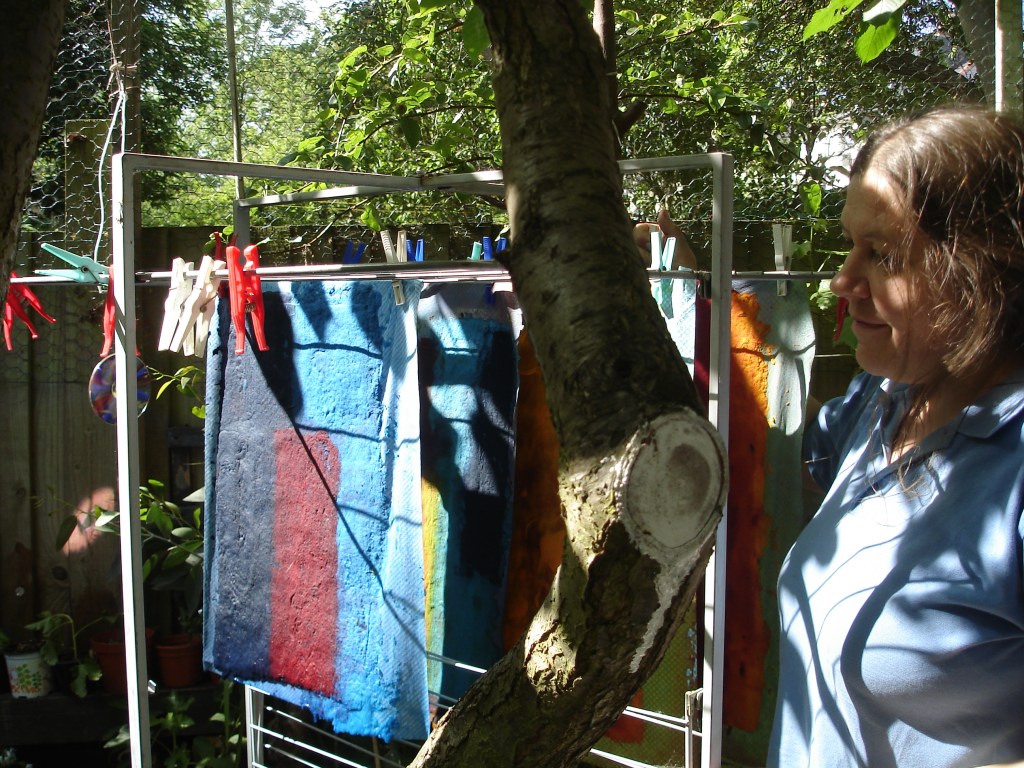
Sunlight plays a big part in the drying process which can take three to four weeks and contributes to the alchemical process between pigment and fibre that eventually produces the strong, high-density colours. The process is characterised by its simplicity and yet strength of the material. These changes in natural forms from the innate interweaving of the fibres themselves are at the core of Irsara’s work and encourage a lyrical reflection on the essence of nature and its inherent changeability.
“I‘m drawn to the simplicity and strength of the material, its feeling of fragility and its alchemical appeal.” Irma Irsara
Irsara sometimes incorporates overlooked detritus into her work that has been discarded carelessly, possibly left behind through natural phenomena or social activity. Her latest abstract works examine the way abandoned plastics retain their strength of colour indefinitely when compared with the organic nature of pure pigment colours and she has shifted her focus to issues concerning micro pollution and climate change. Time-lapse digital video work is another medium used by the artist to illustrate the way nature changes and amplifies the immersive experience that includes colour, abstraction, video and sound when viewing Irsara’s works. The abstraction of texture, colour and form challenges the viewer to share in the conveyance of an experience, an invitation to contemplate, to really observe nature and to see beyond with the inner eye, the conversation that is art.
Come and join me for a preview of my current project at London Bridge Hive this September.
River Net is my new time-lapse work-in-progress which looks at the intermingling of natural and synthetic matter, our relationship with the materials we produce and their impact on the river.
In the work, I use material recovered from the Thames with a particular emphasis on plastic food netting. I’m interested in the ambiguity of something developed in part for its aesthetic appeal but which, after single use, becoming unwanted and damaging to the natural environment.
By repurposing it, I examine how much of the original, artificial beauty it retains whilst reflecting on how it might compromise the life of a river.
“What I call ‘plastic coral’ attaches itself everywhere and to everything, breaking down over time into minute pieces that remain in our waters, rivers and oceans. It finds its way inside fish, animals, insects and humans, in all eco-systems even down to the very phylum of plants”
On 22 September I’ll be presenting a lunchtime screening of a 15-minute video preview of the on-going ‘River Net’ project, followed by a Talk and Q&A. Throughout the day, the video will continue to run on a loop, and I will be available to engage and discuss with visitors. I look forward to seeing you all there.
RIVER NET Thursday 22nd Sep 2022
12.30 – 1.30 Talk
1.30pm – 7pm Meet the Artist – drop in
London Bridge Hive, 8 Holyrood Street, first floor, London, SE1 2EL
River Net is Supported by Team London Bridge and Totally Thames Festival.
In 2014, I visited a section of canal between Johnson Lock and Limehouse Basin that had been drained to allow specialist bricklayers to repair damage to the canal wall. I was interested in signs of erosion of sand between the bricks at the highest point and was drawn to the idea of the walls of the canal as indicators of changes over time.
Water Levels 1 – 31 x 52 cm 2021
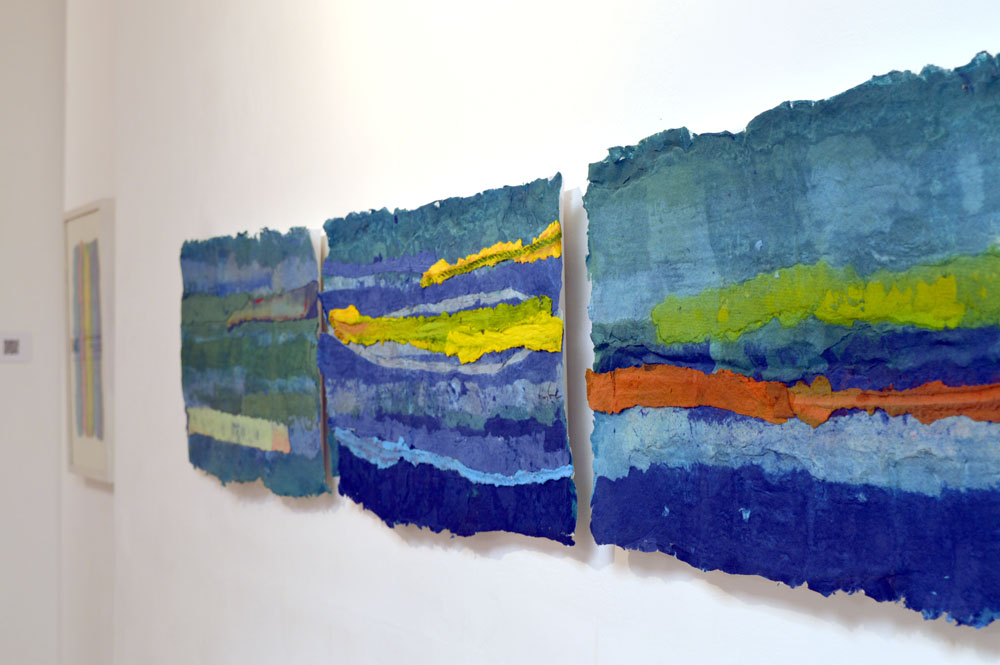
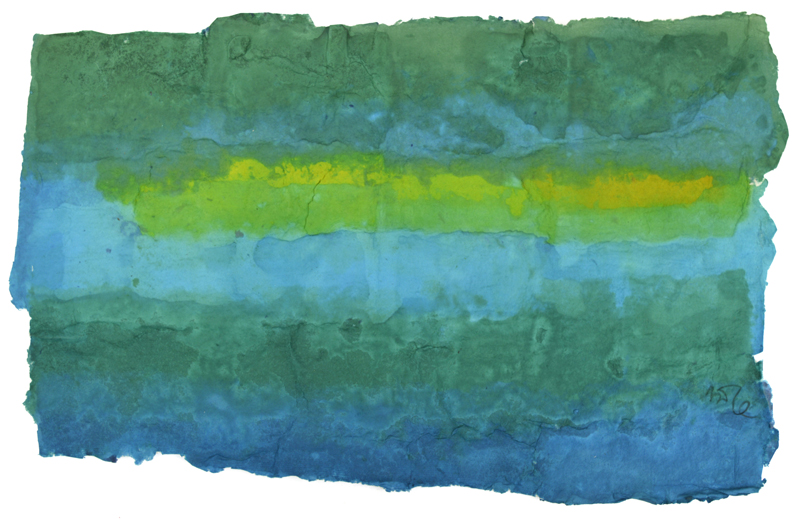
In my recent series Water Levels, a selection from of which I’ll be presenting at the Tabernacle Gallery this June, I’ve use mostly flat colours – jade and blues – to give the feeling of expanding lines. I wanted to give to the illusion of looking down and sideways, to create an abstract interpretation of a real view, which considers elements of temperature, time, air and landscape.
Added tension is created through the use of one strong colour – a light reflected, a moment of tension or a fixed point around which changes occur.
INTERVALS The Tabernacle Gallery 34-35 Powis Square, London W11 2AT
PRIVATE VIEW Wednesday 8 June, 6pm – 9pm with poetry reading by Frances Presley
Exhibition times Tuesday 7 June – Sunday 12 June 2022
UK artist Irma Irsara presents her brand new works at Tabernacle Gallery on the occasion of ‘Intervals’ exhibition opening in June.
Water Levels 1 (2021) – 31 x 51 cm, cotton fibre, dyes
On June 7th, Irma Irsara, contemporary Italian artist who lives and works in London, will present her latest artworks at the Tabernacle Gallery on the occasion of the summer exhibition, Intervals.
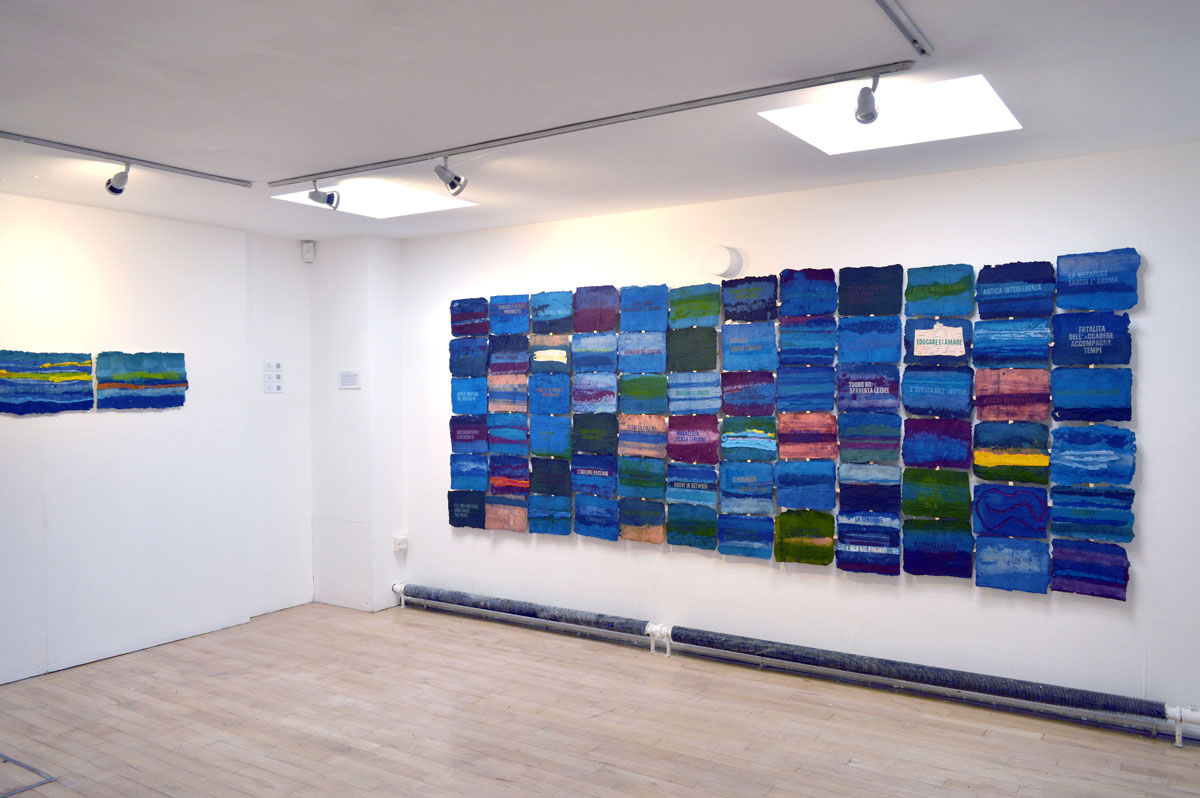
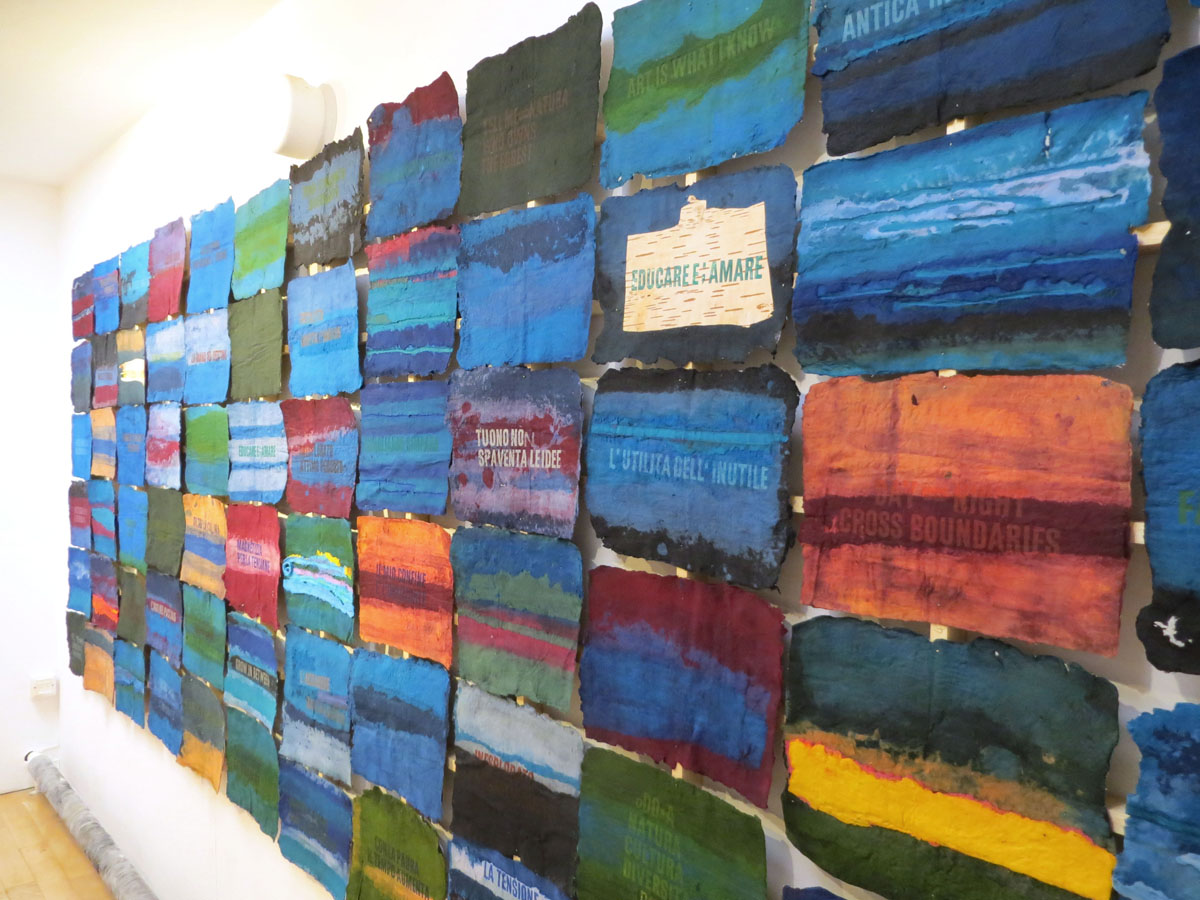
Irma will be exhibiting three of her latest projects with centrepiece of the show, Accendo la luce, nasce l’ombra (2021), a large installation work, consisting of 72 panels and created using a dedicated papermaking technique, being presented for the first time. A selection from Irsara’s recent Water Level Series relating to ecological and environmental themes and created using the same paper pulp technique will also be debuted. Finally, the artist will be showing a time-lapse digital video work, originally created for the exhibition Earth is Calling at the Crypt Gallery in 2019, part of which was also shown at the Bargehouse for Totally Thames, Foragers of the Foreshore exhibition.
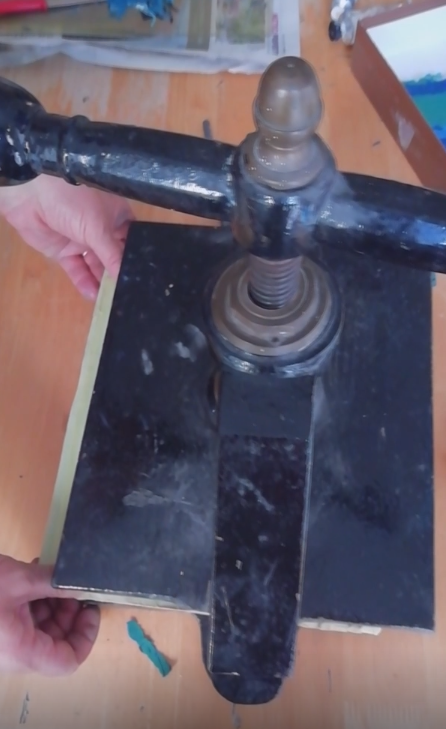
Accendo la luce, nasce l’ombra (2021), is inspired by notions of loss of connectivity and nostalgia for past encounters leading to feelings of isolation and vulnerability. At the same time, it explores the shared life experiences and the sense of equality that certain phenomena create, uniting people while keeping them apart. The shift in the perception of time as a result of the pandemic, led the artist to change her outlook: instead of working towards a precise event or end point, she found herself reimagining outcomes by revisiting the past, looking at old work and notebooks, and extracting significant words and phrases in a process of re-evaluation. Irsara worked extensively on this work over the lockdown periods, forming a composite wall piece that consists of separate panels with embossed lettering, using letterpress printing on a book binding press. Each standalone piece becomes part of the overall installation – a wall of fragments incorporating old sayings with scraps of personal, nostalgic thought. The words are deliberately intended to have possible multiple meanings to reflect diverse responses to a common experience and evoke an imagined future.
Today – Thursday 11 November – I’ll be giving away a mail-art edition of 25 pieces at 12 noon on a first-come-first served basis. All I ask in return is £2 P&P to comply with Big Cartel rules. NOTE: FRAME NOT INCLUDED
STRATA IN BLU Solo noi siamo il volto del nostro tempo
I’ll be doing a mail-art giveaway in 9 days time (Thursday 11 Nov, 12 noon) An edition of 25 paper pulp/lino pieces will be made available on a first-come-first-served basis. Details of the piece below and a link nearer the time.
Multiple of 25 numbered and signed on reverse
Paper pulp (cotton linters), dyes, lino printing 11(H) x 15(W) cm
The furrows, created by stripping away embedded hollow paper strips from the pulp layers, depict water level marks and indicators of wider changes. I included the intermittent imprint of knots in the paper to denote the interruption to the natural flow of water.























 Irma Irsara