Analytical aspects of conservation

It was a privileged to meet Christine Sitwell, the National Trust paintings expert at her talk, Analytical aspects of conservation in painting, organised by The Quekett Club in the Natural History Museum yesterday. It was fascinating to hear her speak about the process of attribution in relation to the Rembrandt self-portrait at the National Trust’s Buckland Abbey in Devon.

Christine talked about how technology is used to identify different periods through examination of different layers (ground), pigment and varnish. Minute specs of paint – usually taken from a tear or from the side – are examined under the microscope. She talked about the value of real pigments (various periods) and the use of spectronomy to pinpoint elements such as pigments, cobalt, potassium, nickel, smelt.

I very much hope that they can also authenticate the Titan as the one missing from the series.
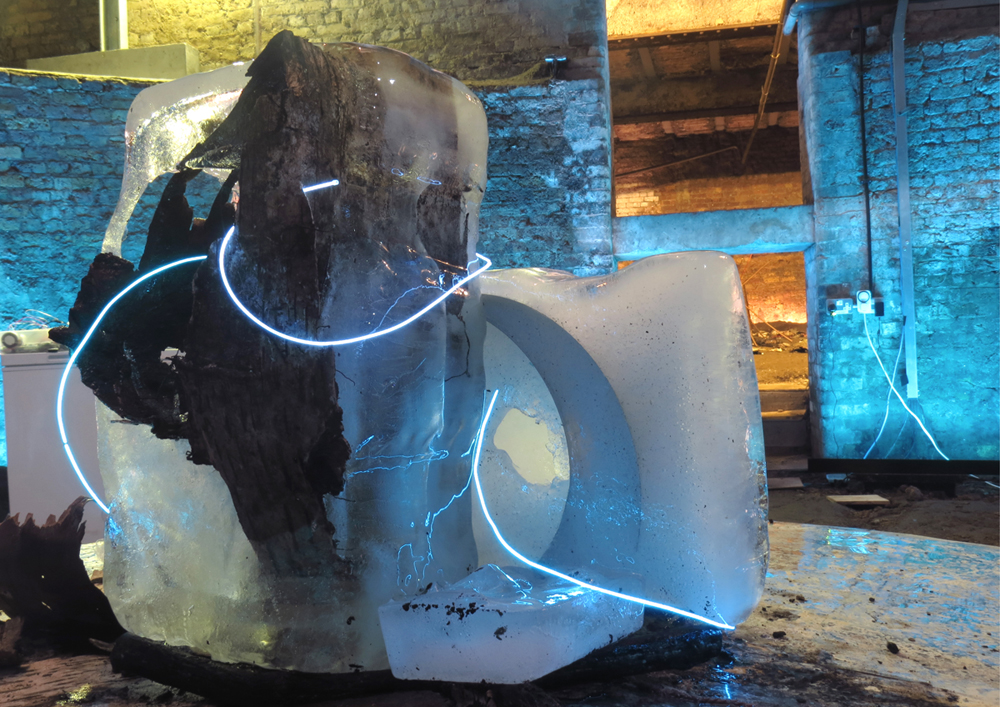
Zero Celsius DAY 13 – 02

ZERO CELSIUS

Victorian Ice Wells, London Canal Museum, King’s Cross  –  Non-permanent, ever-changing, time-based ice installation

Materials:
Ice (created from canal water on site each day using three top loading freezers from), 1.3mm El Wire, different lengths powered by mains and battery packs (for embedded lights), Melanex shapes, Silver birch bark sourced from fallen trees source restored to original location at the end of the project. Charcoal made from pruned vine branches.

Dimensions variable.

Zero Celsius was an opportunity to witness, explore and be part of an unexpected subterranean landscape in the heart of King’s Cross. Through investigation and elaboration of different elements embedded in blocks of ice, artist Irma Irsara developed an experimental work with ever-changing outcomes. The installation process was determined by the interaction between the artist, the unique host location and the melting shapes of ice, resulting in a unique participatory experience.

www.zer0celsius.wordpress.com