Keyence VHX 5000 Microscope

Thanks to Matthew Armes, technical sales engineer for Keyence UK, who called round on Thursday to demonstrate the VHX-6000 Digital Microscope.

This is incredibly easy to use and is capable of real-time focus stacking.

Multi-angle observation by rotating the stage or tilting the lens up to 90 degrees means you don’t have the move the samples by hand. It produces images up to 1600 x 1200 – for higher res, automatic stitching is possible with the motorized stage.

Also good depth of field, embedded polarizing lens and really fast automatic focusing.

I had the opportunity to photograph some of my micro fibre plastic slides, melted snowflake and ice slides and lichens.

Images from clockwise: synthetic net bag for fruit produce, synthetic tights, melting ice, dried Lobaria Pulmonaria x 2, melting ice

QUEKEX 2018

Captured irregular snowflakes (London 2018) on slides, one of which shows microfibre plastic which could be clearly seen during the melting process. It’s worth asking what sort of damage plastic fibres are doing.

Photos will be shown at the Quekett Microscopical Club Quekex exhibition at NATURAL HISTORY MUSEUM (foyer of the Flett Theatre), Cromwell Road, London SW7 5BD
Saturday 6th October 2018, 10.30am – 4pm
Invitation-only exhibition.

Zero Celsius – digital prints

My current exhibition is at Resource for London, 356 Holloway Road, London N7 6PA until 27th March ’18 – exhibition statement below.

“The transparency of the material leads me to look closer, almost searching for and imaginary landscape inside the heart of the ice. I find ice is very similar to other materials I have used in the past like glass, mirror and pulp. When light enters the artwork, it makes the edges more defined and frees the boundaries between artwork and the surrounding space.”
Irma Irsara‘s work is influenced by an interest in environmental issues in a practice that embraces techniques as diverse as fibre art, stained glass bookmaking, print, video and installation. Within the context of the Anthropocene Epoch, where human activity has been the dominant influence in altering the geographical landscape, Irsara contemplates ideas of  symbiosis as a strategy for human survival. The symbiosis of organic materials with the ice is particularly significant. It is the moment when nature takes over and the artist becomes the observer of new forms.

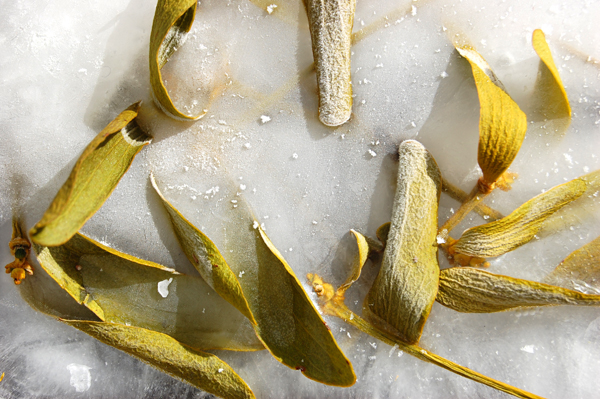
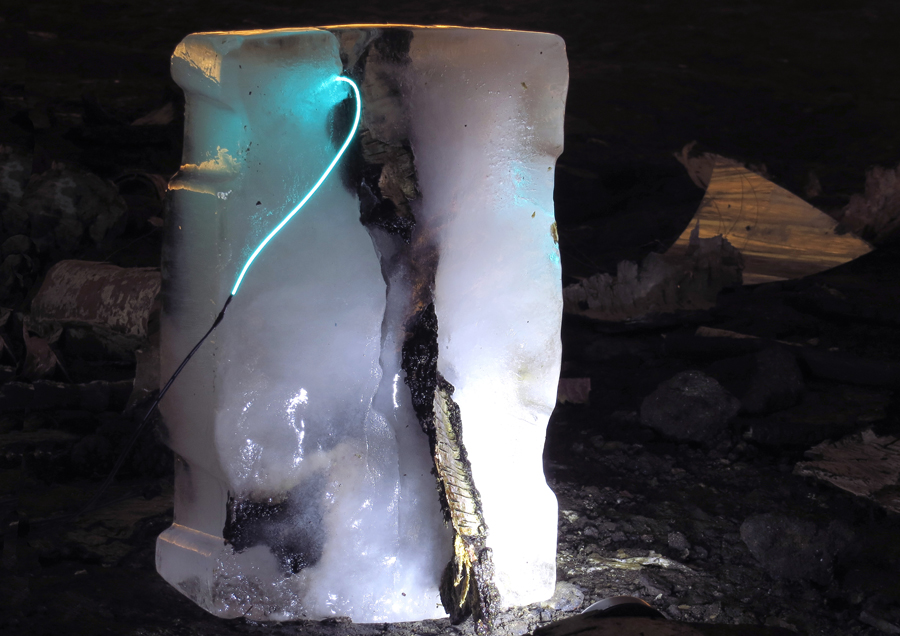
The digital prints on display are a permanent record of the time-based, site-specific installation work created by the artist in 2013/14. This constantly changing and daily-renewed work was produced over a three week period in the former Victorian ice wells at the London Canal Museum, King’s Cross. Working with ice, a material very much associated with the theme of climate change, the work explores natural cycles and outcomes in relation to surrounding conditions and is intended as a starting point for debate. She has a fascination with the medium, from the fusing together of forms to the slow, imperceptible movement of embedded material – bark, melinex, wire lights – as the melting process progresses. She also examines the possibility of producing hollow forms of ice by utilizing the natural freezing process. This is further explored in her more recent time-lapse pieces. Irsara is intrigued by the notion of a precise moment of transformation and change of state.
Rotherhithe

A visit to Canada Water Library at the end of last week gave me the opportunity to take photos along the stretch of the Thames between Brunel Museum to Tower Bridge

Ritornando dalla biblioteca ‘super library’ di Canada Water e caminando verso il fiume, ammiro il riflesso dell’architettura in evoluzione attraversata dal presente, passato e futuro. Questo giorno il Tamigi era ormai sommerso dalla nebbia e qui riscopro la mia Venezia in inverno.

Mi chiedo se l’architettura vista davanti funziona in armonia con la natura solo nella nebbia?

Fissando l’acqua grigia del Tamigi, rifletto sulla praticalità del mio nuovo progetto che eventualmente diventerà opera – monster soup del 2017.

Charcoal Text 1

I Irsara Charcoal Text 1 sml

CHARCOAL TEXT 1

medium:
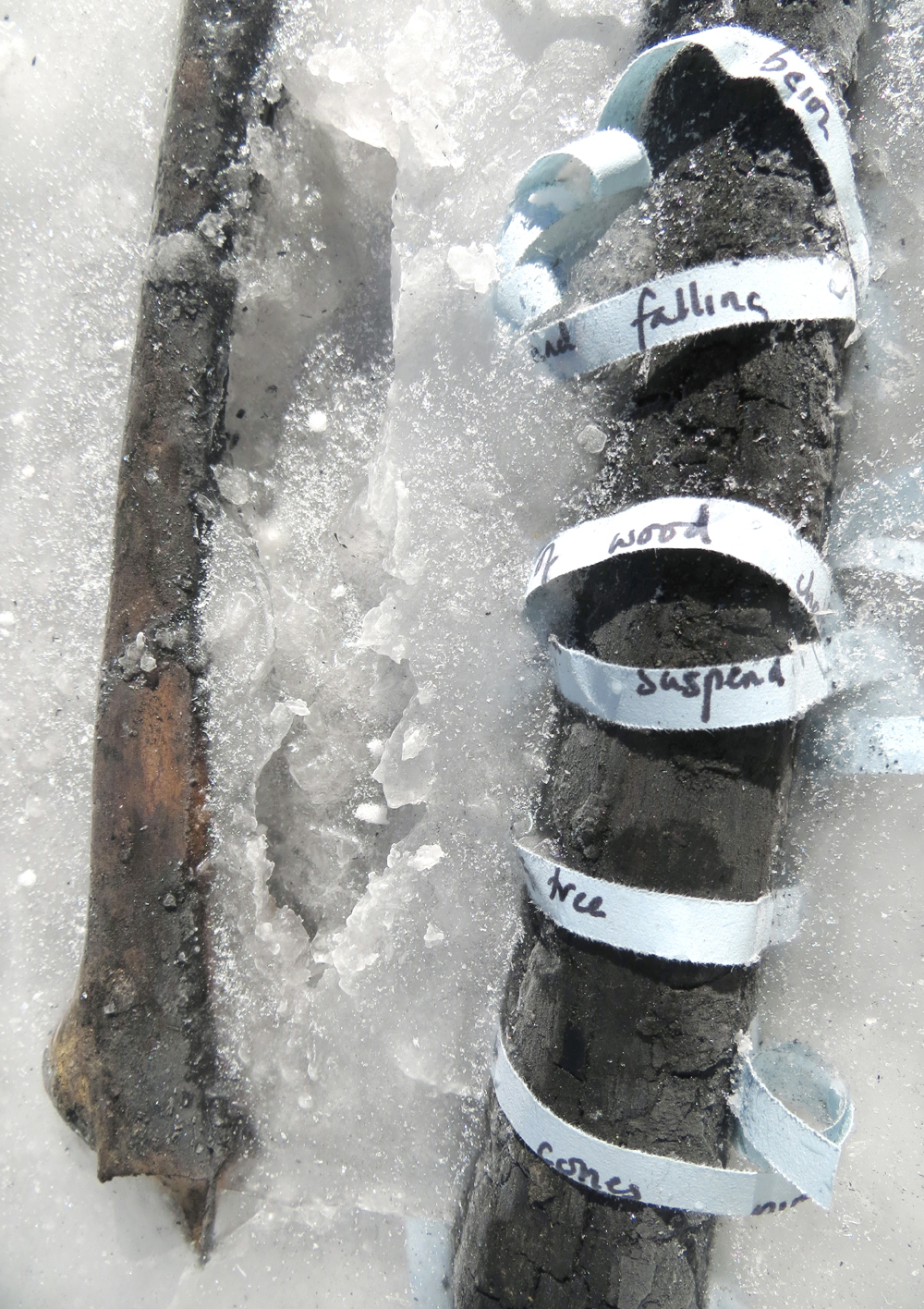
digital print of ice, burnt wood and shredded text
Epson archival inks on Somerset Velvet 300gsm paper

size in cm: 59.5 x 84
printed at London Print Studio, Harrow

Charcoal Text 1 is a part of a series produced for the publication Halse for hazel, a sequence of poems about trees, their languages and forms by Frances Preslsy. The collaboration took place during the final year of Presley’s project funded by the Arts Council and included research at the national collections of Kew Gardens and Wakehurst Place. The large-scale versions of the images and texts were used for the subsequent exhibition ‘In the open’, at Murray Edwards College in Cambridge (2015)

Retina Diamond Leaf

Diamond Leaf Retina

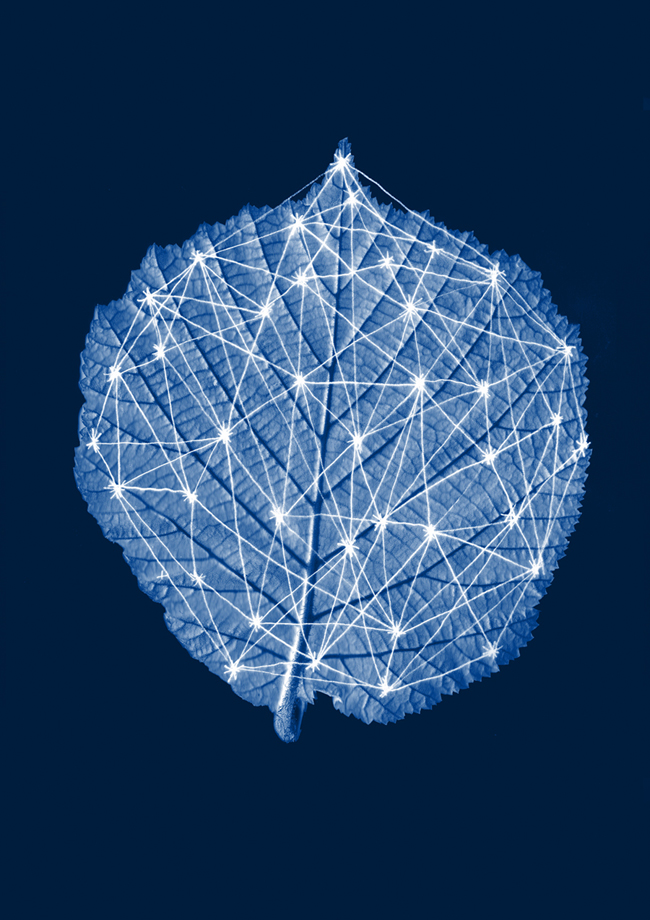
Retina Diamond Leaf, on show at Art at the Bridge 7 (Tower Bridge Engine Rooms), evolved from a collaboration with poet Frances Presley in 2015 and coincided with the publication of her anthology ‘Halse for Hazel’, funded by the Arts Council. The work incorporates the concept of bridges as neural networks along which sparks of light can travel. The drawing, superimposed on an inverted photo of the feminine hazel leaf, refers to the repairing of a damaged retina and the fear of losing the ability to see and connect which is described in Presley’s text.