INTRECIADES at Lanserhaus in Eppan (South Tyrol), Saturday 2 March to Sunday 9 March – work by nine artists from Val Badia.
Video shows my timelapse work CORAL (music Jonathan Lambert), as well as light works using recycled plastics by Cristinarosa Pizzinini and drawings by @ursula Tavella.
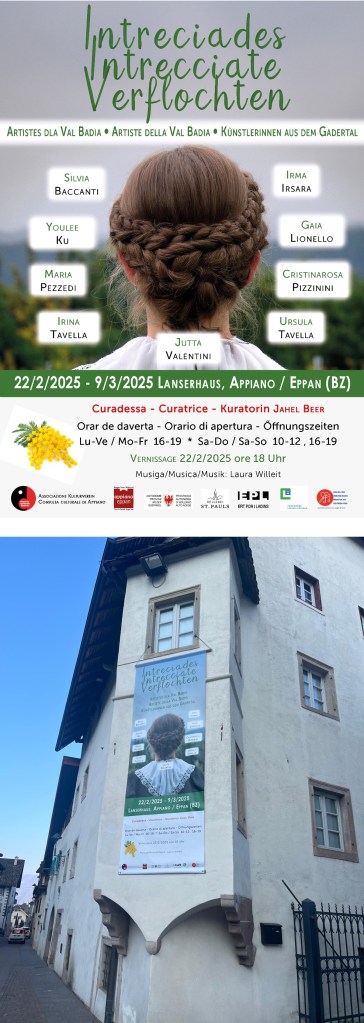
Intreciades Mostra dles artistes dla Val Badia tla Lanserhaus a Eppan. Daurida dla mostra en sabeda ai 22 de forá 2025 dales 18:00, la mostra sará da odëi cina ai 9 de merz 2025
Cun la curaziun de Jahel Beer mët fora sües operes les nü artistes de liam cun la Val Badia y l’EPL-Ert por i Ladins Silvia Baccanti, Youlee Ku, Maria Pezzedi, Irina Tavella, Irma Irsara, Gaia Lionello, Cristinarosa Pizzinini, Ursula Tavella y Jutta Valentini. I orars de daurida dlamostra é: dal lönesc al vëndres dales 16:00 ales 19:00, y sabeda y domënia dales 10:00 ales 12:00 y dales 16:00 ales 19:00. La vernissaja é söl program ai 22 de forá dales 18:00 cun salüt y introduziun, y musiga de Laura Willeit. Da sabato 22 febbraio a domenica 9 marzo presso la Lanserhaus di San Michele Appiano si potranno ammirare le opere di 9 artiste della Val Badia nella mostra intitolata “Intreciades”. VERNISSAGE sabato 22/2 h. 18.00 Lanserhaus Appiano (BZ)
Intreciades is an Exhibition of artists from Val Badia at the Lanserhaus in Eppan. l’EPL-Ert por i Ladins The exhibition runs from Saturday 22nd March to Sunday 9th March Curated by Jahel Beer the exhibition features works by artists Youlee Ku, Maria Pezzedi, Irina Tavella, Irma Irsara, Gaia Lionello, Cristinarosa Pizzinini, Ursula Tavella and Jutta Valentini. Opening hours: Monday to Friday 4pm to 7pm, Saturday and Sunday from 10am to 12pm and 4pm to 7pm. VERNISSAGE Saturday 22/2 at 18.00 Lanserhaus Appiano (BZ) Music by Laura Willeit. Organizza la Consulta Culturale di Appiano Curatrice della mostra Jahel Beer EPL – Ert por i Ladins ODV
CORAL
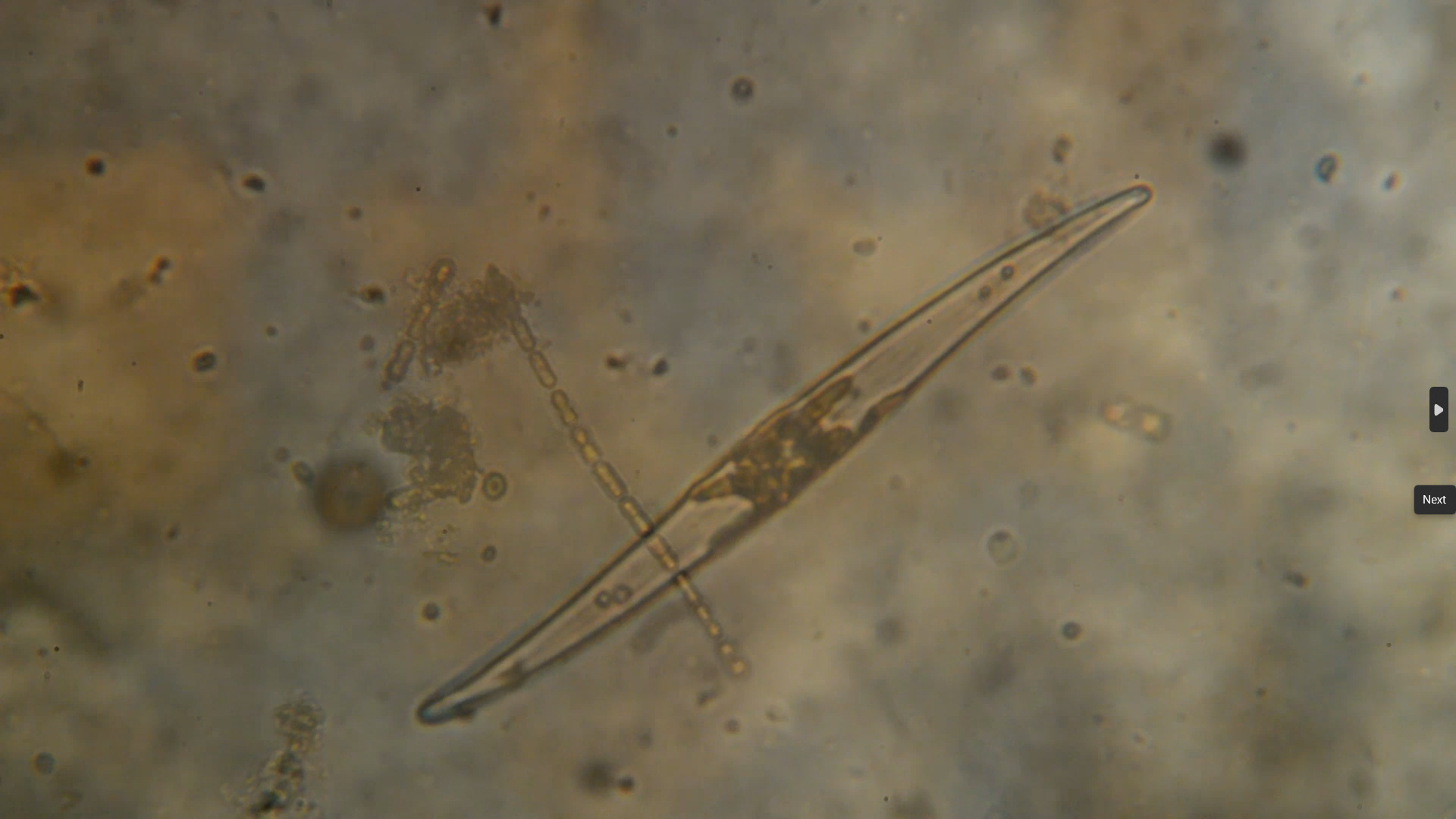
Microscopic time-lapse video Length: 04.41 min Irma Irsara 2022 Assistente al montaggio: John O’Leary Sonora ambientale: Jonathan Lambert
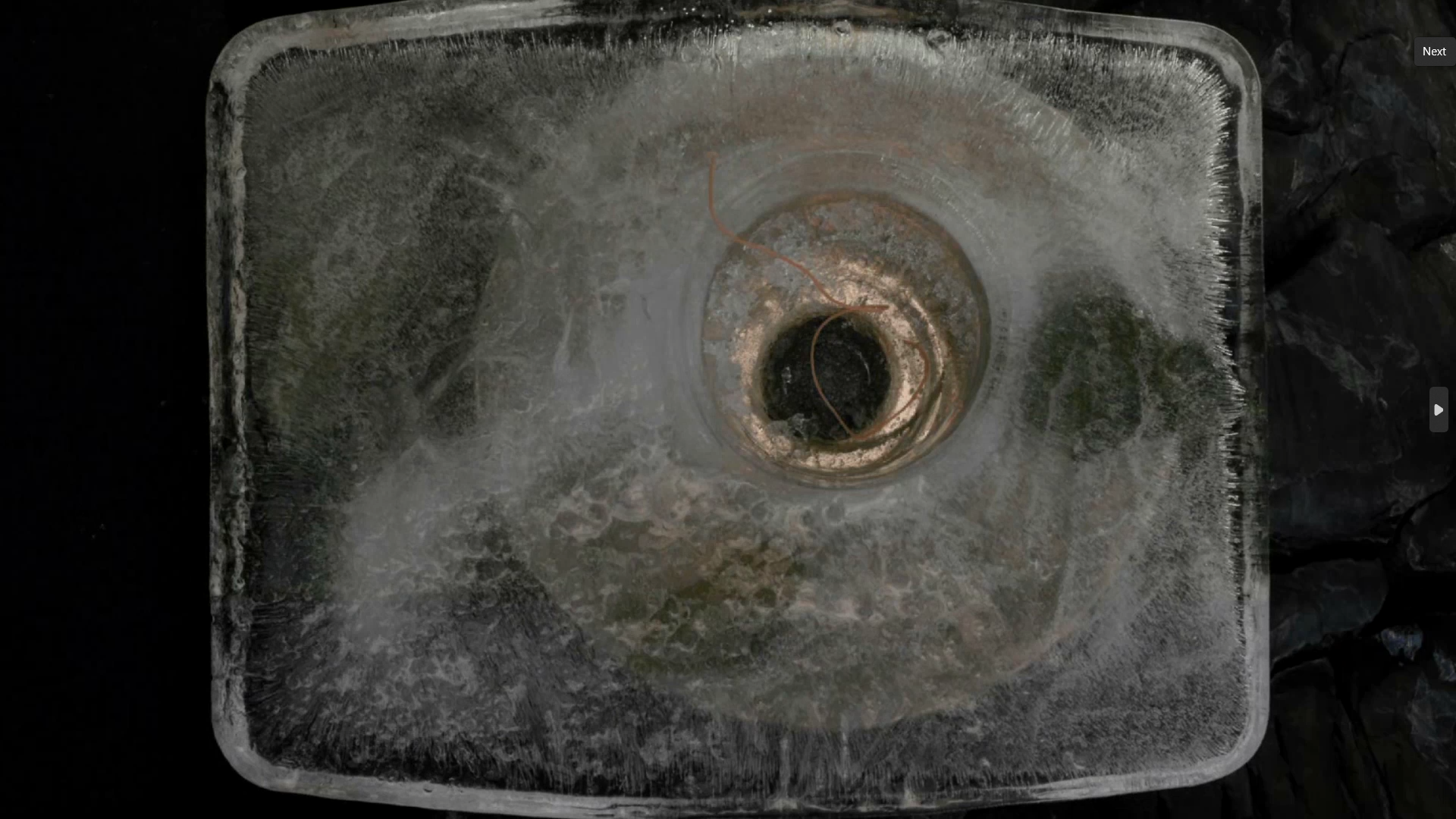
Coral è un’esplorazione delle particelle di plastica invisibili presenti nei nostri ecosistemi, con particolare riferimento alle materie plastiche impiegate nell’industria alimentare. Per questo progetto ho utilizzato esemplari estratti dal Tamigi, dalla grotta della neve di Armentara presso Monte Croce, i fiocchi di neve catturati prima di cadere al suolo, ragnatele e nidi di uccelli costruiti in parte con fibre di plastica. Ho fotografato diverse sequenze timelapse al microscopio che ho composto in Sony Vegas Pro. Il video è parte di una serie di opere che esplorano i cambiamenti ambientali provocati dall’attività umana.
A volte il ghiaccio che si scioglie anima il contenuto. Altre volte, sono presenti microrganismi, incluso gammarus, che, come dimostrato dalla ricerca, ha tracce di microplastiche nel suo organismo. Un’altra sequenza rivela la decomposizione delle salviettine umidificate con la restante fibra di plastica, che sconvolge diversi ambienti nel tempo.
Come artista multidisciplinare non ho le limitazioni di uno scienziato, che mi permette la libertà di esplorare il mio soggetto in modo creativo e sperimentale.
Credo che l’arte possa essere un punto di partenza per un dialogo e anche un ponte che si connette con la scienza.
CORAL
Microscopic time-lapse video Length: 04.41 min Irma Irsara 2022 Assistant editor: John O’Leary Ambient sound: Jonathan Lambert
Coral is an exploration of the invisible plastic particles present in our ecosystems, with particular reference to plastics used in the food industry. For this project, I used specimens extracted from the Thames, from the Armentara snow cave near Monte Croce, snowflakes captured before falling to the ground, cobwebs, and birds’ nests built in part with plastic fibres. I photographed several time-lapse sequences under the microscope that I then edited in Sony Vegas Pro. The video is part of a series of works that explore environmental changes caused by human activity.
Sometimes the melting ice animates the contents. Other times, microorganisms are present, including gammarus, which research has shown to have traces of microplastics in its system. Another sequence reveals the decomposition of wet wipes with the resultant plastic fiber disrupting different ecosystems over time.
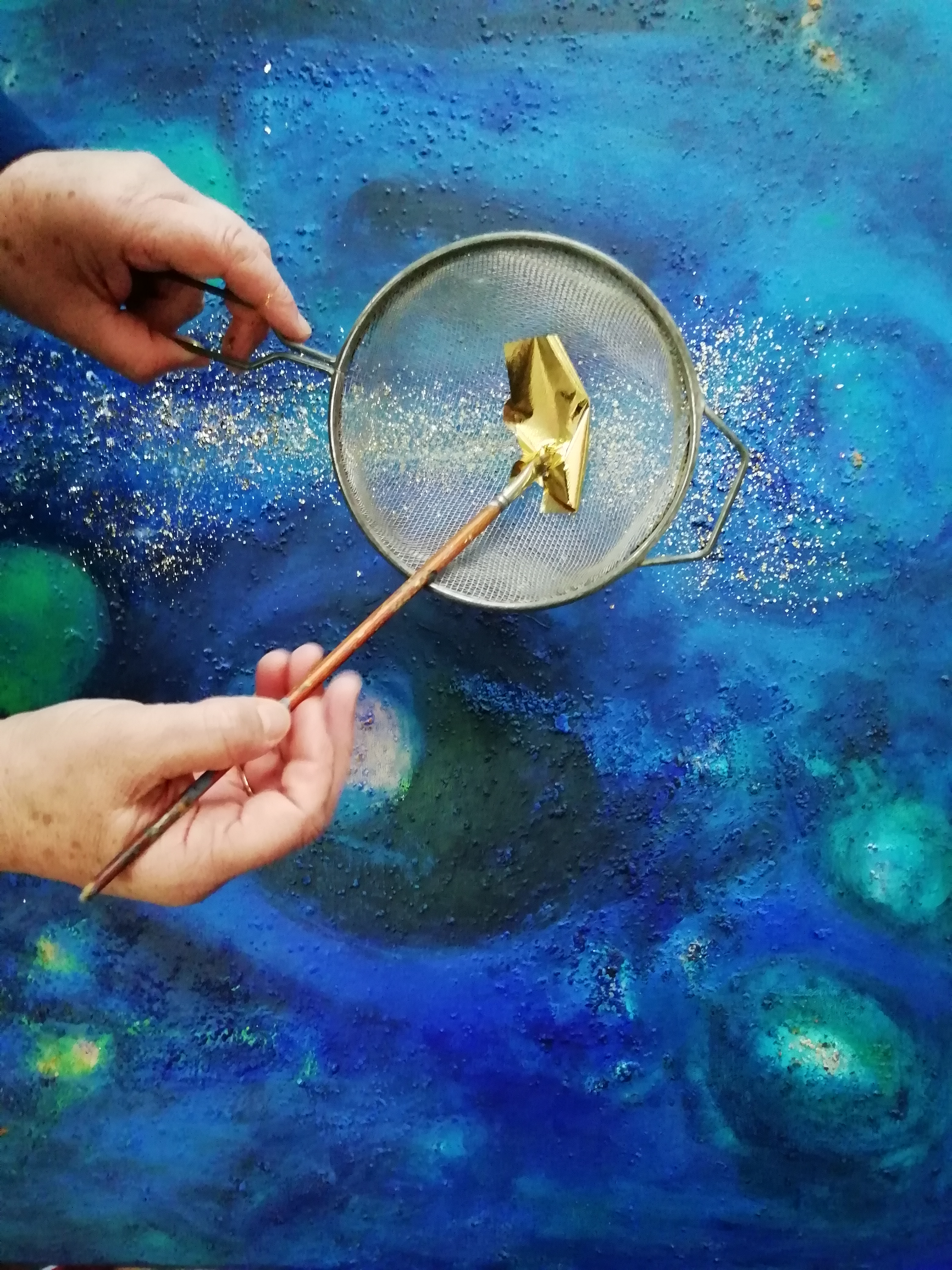
I’m currently working on a series of large canvasses. I’m interested in the technique used in Iranian mosques where gold leaf is sieved to create minute balls of gold. An Iranian restorer explained to me how she uses a restorer’s sieve to achieve the same results. In place of a sieve, I’ve used a strainer, using a soft paintbrush in a circular motion to create points of light.
This series of work will be shown later in the year (Sept) at 54 The Gallery in Mayfair – details to follow.
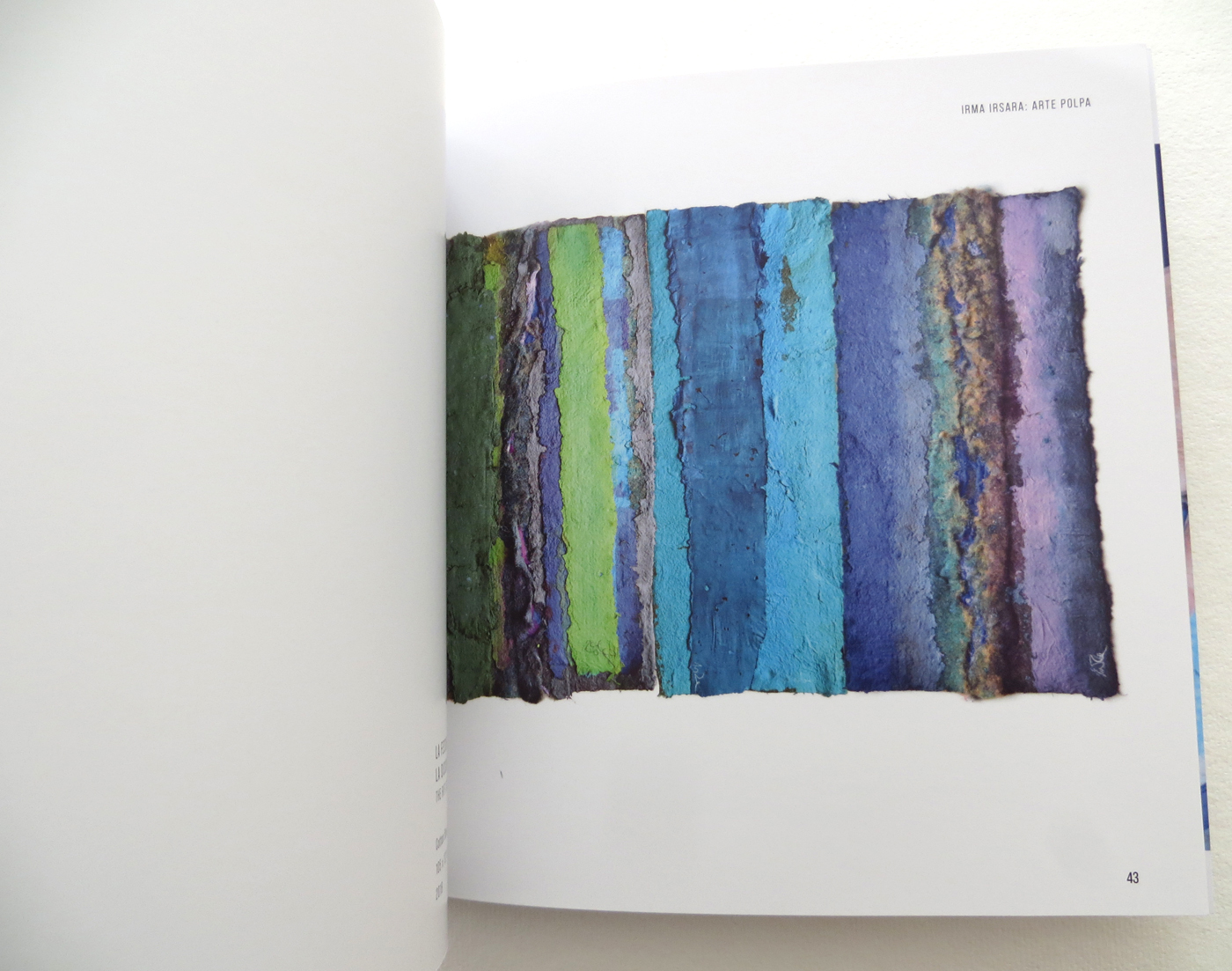
There is a vibrancy to the work of artist Irma Irsara (b.1961, Italy). Shades of bright red, turquoise and blue draw the eye towards the natural materials onto which pigment dyes are embedded. Remnants of pure cotton cloth and fallen bark are incorporated into bold statements of abstract colour. Stand before these images and you experience an energetic force that evokes at once curiosity and contemplation.
Irsara explores issues concerning our natural environment and the way in which we are connected to it. Her lyrical abstract compositions are formed out of found organic materials such as waste cotton fibres and storm debris that she picks up on her travels and intuitively transforms into a vibrant mix by adding pigment dyes in a sort of magical alchemical process.
Inspired in part by the works of the Italian “arte povera” movement of the late 1960s and 1970s, these organic materials are at the core of Irsara’s art and similarly make reference to the natural environment, acting as a statement against mass-market consumerism. Irsara favours the essential nature of life as those artists did through their choice of worthless materials such as bits of wood, rags and scraps of newspaper from where the actual creative process has more significance than a finished object. Irsara rejects the consumerist product in favour of a raw-edged, natural, unfinished art that evokes the real, the instinct and the ephemeral.
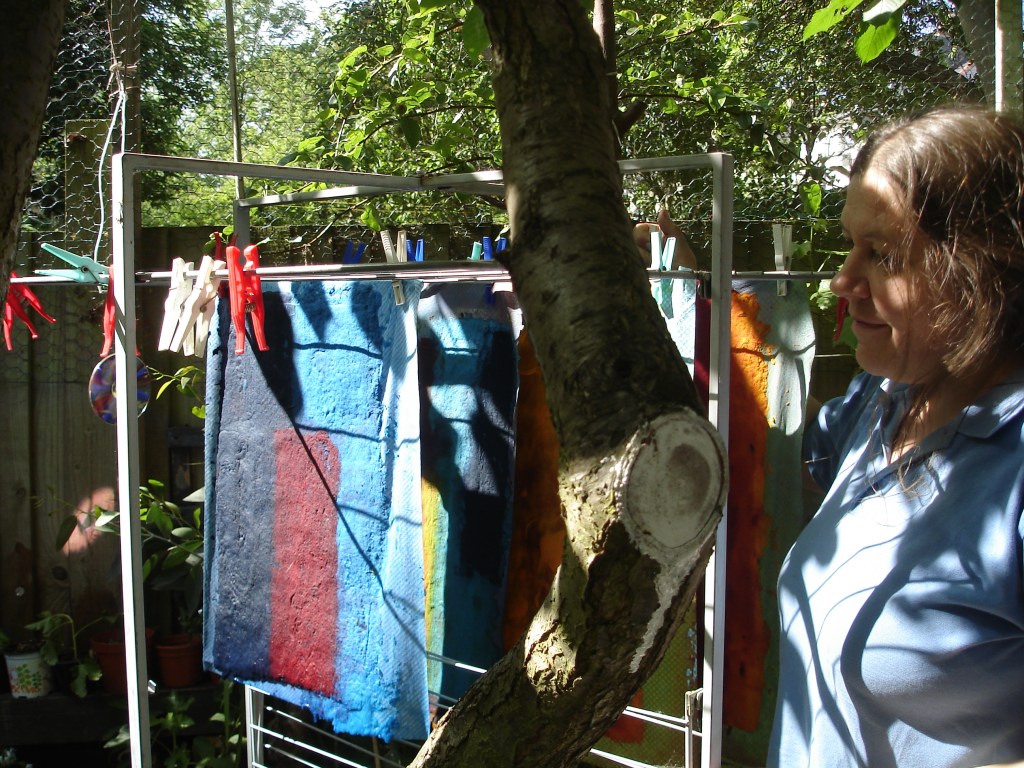
Colour is key to Irsara’s work, and though flat, there is a depth to these abstract works. The eye is drawn into the essence of the work and yet allowed to drift along the rough contours and unfinished edges, beckoning a sort of unpredictability, reminiscent of nature itself. In contrast to the natural brown tones of the earth, the artist calculates exactly a weight and intensity of colour by using a special technique that is akin to the process of paper making. The “arte polpa” process is a term created by the artist and refers to a technique that uses layers upon layers of cotton fibre pulp, pressed down by hand, wet on wet, using a hand mould and deckle process. The artist pushes down on the natural texture of the pulp, creating batches of similar colours to create a basic palette, and to which she occasionally adds a quantity of pure, fibre-reactive pigment dyes.
Sunlight plays a big part in the drying process which can take three to four weeks and contributes to the alchemical process between pigment and fibre that eventually produces the strong, high-density colours. The process is characterised by its simplicity and yet strength of the material. These changes in natural forms from the innate interweaving of the fibres themselves are at the core of Irsara’s work and encourage a lyrical reflection on the essence of nature and its inherent changeability.
“I‘m drawn to the simplicity and strength of the material, its feeling of fragility and its alchemical appeal.” Irma Irsara
Irsara sometimes incorporates overlooked detritus into her work that has been discarded carelessly, possibly left behind through natural phenomena or social activity. Her latest abstract works examine the way abandoned plastics retain their strength of colour indefinitely when compared with the organic nature of pure pigment colours and she has shifted her focus to issues concerning micro pollution and climate change. Time-lapse digital video work is another medium used by the artist to illustrate the way nature changes and amplifies the immersive experience that includes colour, abstraction, video and sound when viewing Irsara’s works. The abstraction of texture, colour and form challenges the viewer to share in the conveyance of an experience, an invitation to contemplate, to really observe nature and to see beyond with the inner eye, the conversation that is art.
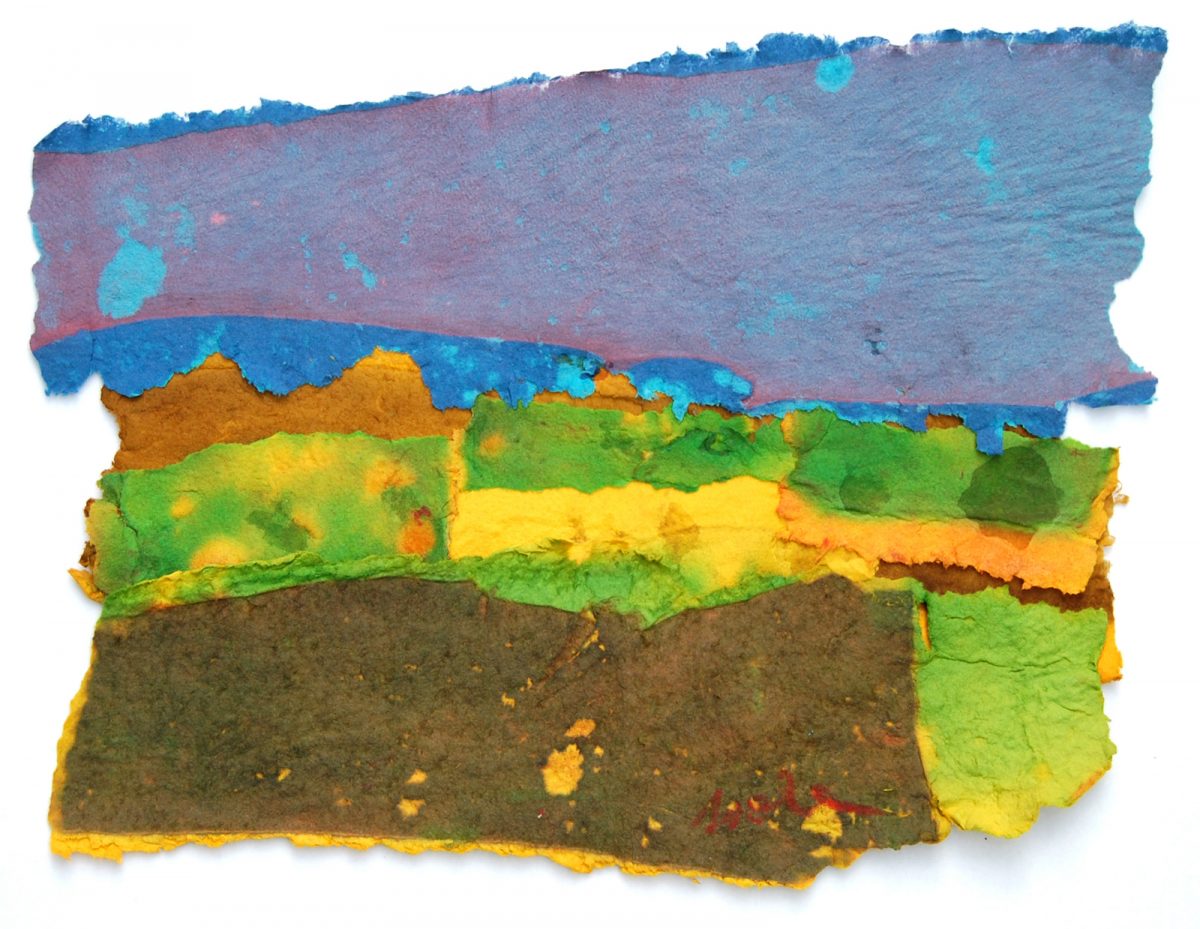
Aerial landscape 5 (2013) represents a view of Sussex showing a landscape delineated by boundary and colour where land meets sea.
The yellow of the rapeseed fields and light greens and browns are divided by the precise man-made geometry of dark green hedges.
I used re-cycled dyed leather where I transferred the colour onto the wet cotton pulp in order to fuse it with the existing pigment dyes.
The result is a work imbued with a feeling of nostalgia, a look back at the past from a position of borrowed time.








 Irma Irsara