Hidden Femininity


The collographs features in this post, based on ethnic garments, were part of a series created for my exhibition Hidden Femininity (Filef Centre 1996). They were developed during my collaboration Automatic Cross Stitch with poet Frances Presley, which looked at the rag trade in North London (N4) run mostly by Greek and Turkish owners.

I was interested in hidden women workers, working illegally in the garment industry in North London during the early nineties. I focused on those working in the factories in and around Finsbury Park mostly run by Turkish and Greek families. In order to gain access, I worked in one of the factories for a number of weeks cutting the loose threads off the finished garments.

I would often see women who couldn’t afford childcare bringing in their babies to work and hiding them from view in their work area. I observed one woman taking secret breaks to breastfeed her child. They were also instructed to disappear if the inspectors arrived.

The women I saw were mostly Indian and Eastern European who relied on the work for their survival and whose circumstances resulted in their exploitation.

The factories have disappeared from the area due to regeneration.

Details of the artworks:
available from irmairsara.bigcartel.com

Cintura (belt) 1996
Collograph using material (factory off-cuts), card with stitching, coloured tissue, rolled colour (oil).
One of three variations from the same card plate, so each one unique.

Print size: 12.5(H) x 30(W) cm
Paper size: 19(H) x 35(W) cm

Punto riso per una sposina (Rice Stitch for a Bride) 1996

One-colour embossed collograph (card plate) of a child’s knitted jumper.
AP1 Artist proof 1 of 2 variations / no edition

print size: 21(H) x 48(W) cm
paper size: 28.5(H) x 57(W) cm

Guanti per sposina (Gloves for a Bride) 1996

One-colour embossed collograph (card plate) using wedding gloves.
AP2 Artist proof 2 of 3 / no edition

print size: 31(H) x 22(W) cm
paper size: 44(H) x 27(W) cm
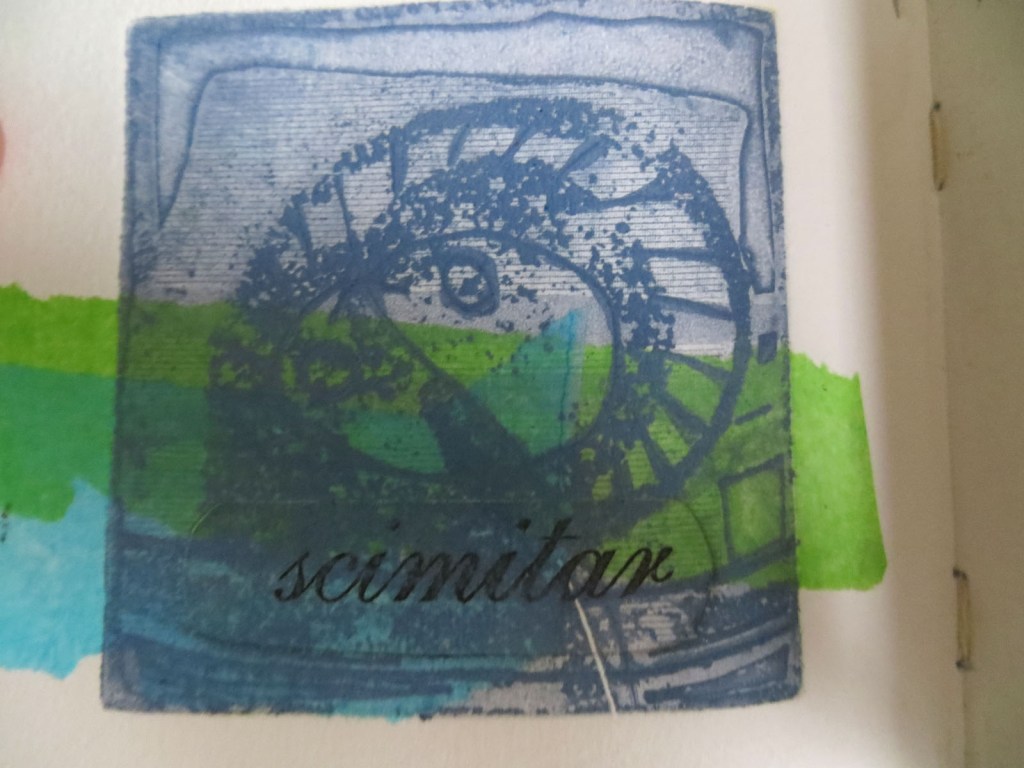
Porous

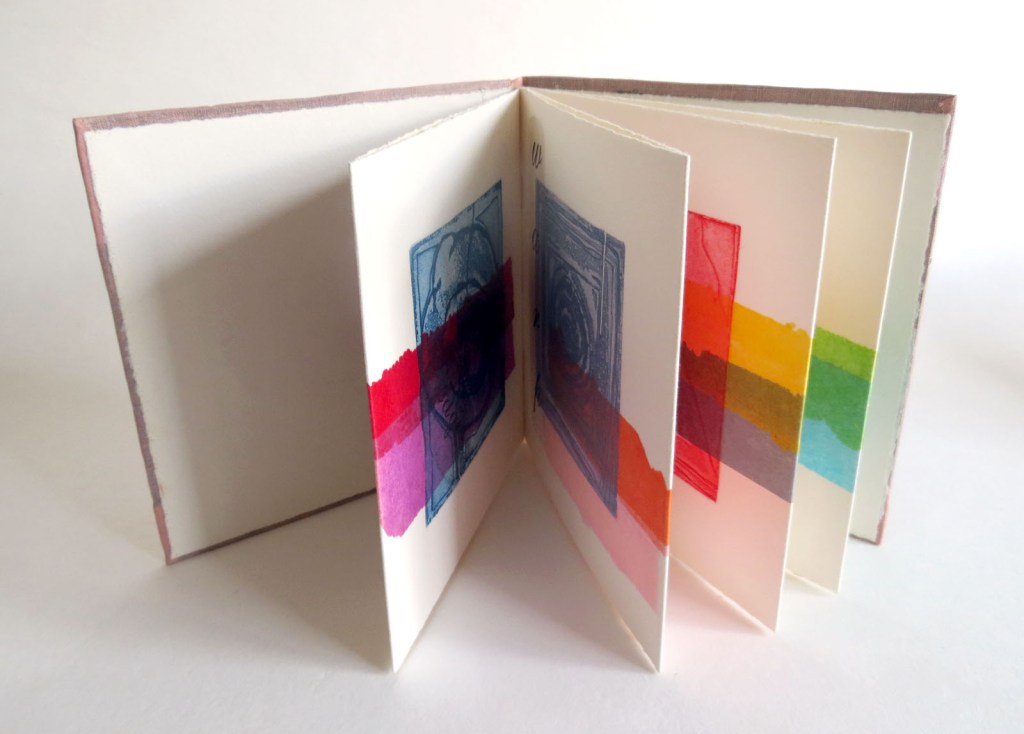
Porous refers to the filtering of a feminine aesthetic that runs throughout the book. Using basic shapes within the images – spiral, triangle, circle, square – my aim was to transform the masculinity of the four elements.

I used various materials to imprint patterns into the softground – materials that relate to ideas of feminism, liberation and empowerment. These include lace from old dresses and, more importantly, tights, significant as they derive from hose originally worn by European men, subsequently appropriated by women.

Materials from women’s fashion are also a reference to the clothes factories local to me at the time but now gone (around Fontill Road, North London) which were predominantly Greek and Turkish.

The single words, produced with photo etching, were suggested by Frances Presley as counterpoints to the imagery

Offered for £150 as part of #artistsupportpledge

Limited edition artists book with hand-printed etchings
13/20 – number 13 in edition of 20
(number 1 was purchased by British Library, Modern Contemporary Collection)

Linen-coated hard cover
Stitch bound – printed back and front

8 pages + blank inside covers
8 x 2 plate etchings total – 1 per page
Etchings are aquaforte, sugar lift, aquatint, soft ground incorporating colour tissue (Chine-collé)

single word texts are etched on shaped plates

book size 16.5 x 16.5 cm
page size 16 x 16 cm

About the scheme:
#artistsupportpledge is an artist-led movement and network to support artists struggling financially during Covid 19 using Instagram.
Full details: artistsupportpledge.com

Ash Seeds

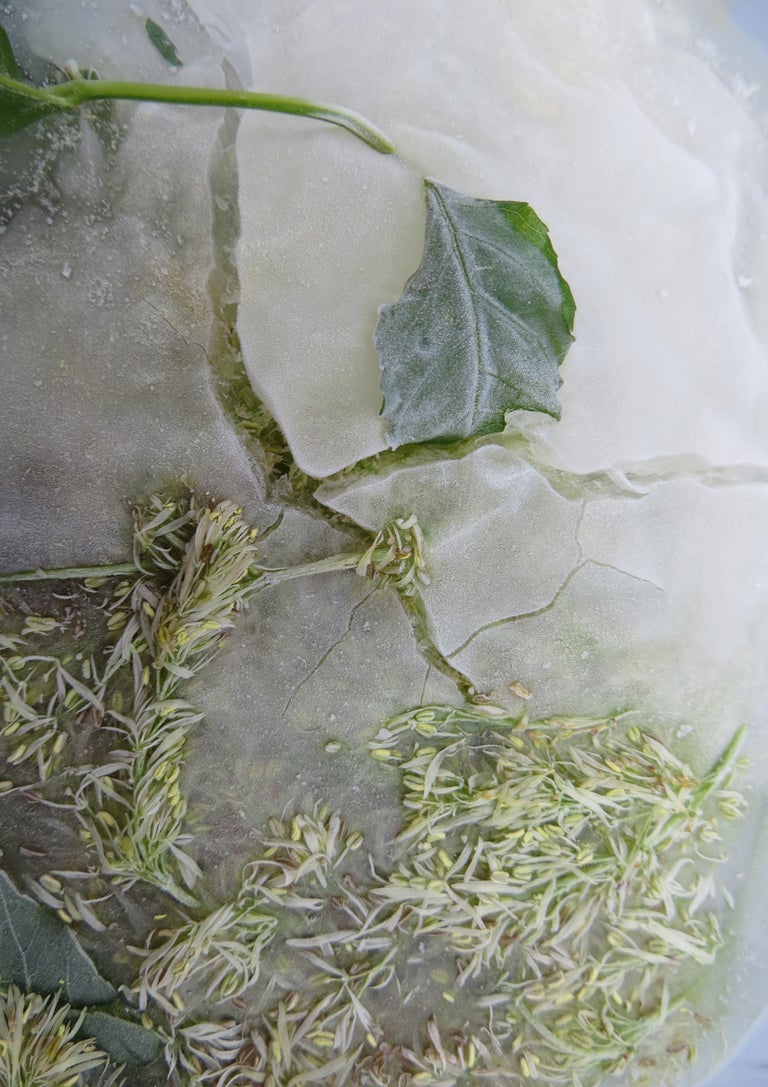
‘Ash Seeds’ (2015) evokes the ancient human significance of the ash tree and its fragility. The digital print is of constructed ice and plant material with seeds from an ash tree afflicted by Chalara dieback disease.

One of a series produced for Halse for hazel (Halse), a sequence of poems about trees, their languages and forms by Frances Presley (Shearsman Books). The images were reproduced in black and white in the book.

The collaboration took place during the final year of Presley’s project funded by the Arts Council and included research at the national collections of Kew Gardens and Wakehurst Place. Images and texts were exhibited as part of the exhibition ‘In the open’, at Murray Edwards College in Cambridge in 2015.

Available to buy from: irmairsara.bigcartel.com/product/ash-seeds

Signed/numbered
limited edition digital print
edition of 15

Epson archival inks on Somerset Velvet 300gsm paper

digital print of birch bark, dyed paper pulps, ice and shredded text

H 84.1 x W 59.4 cm

Watermarks

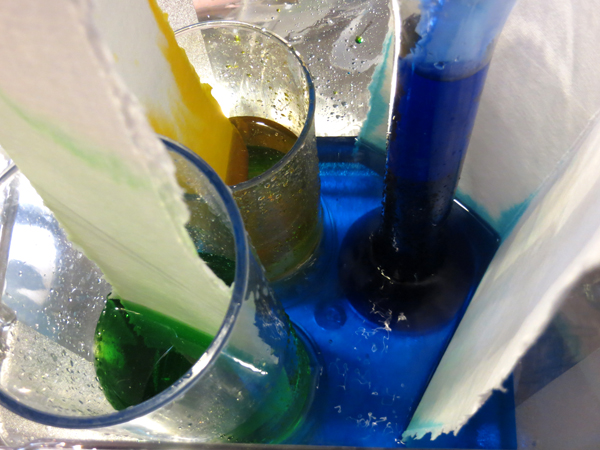
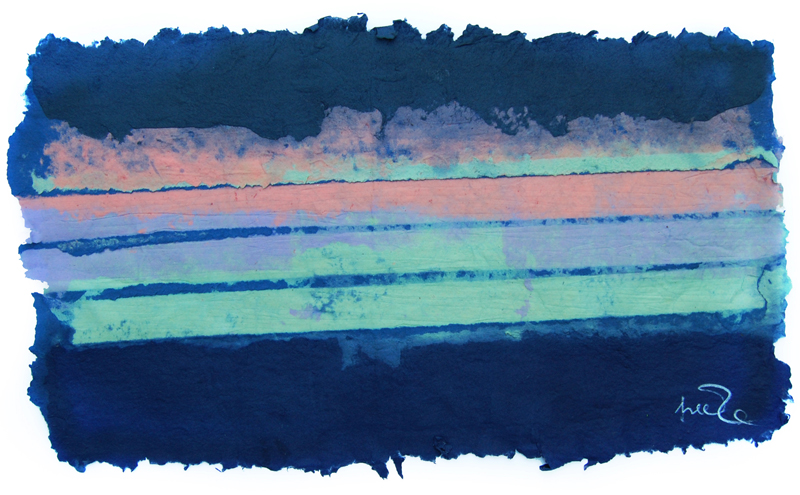
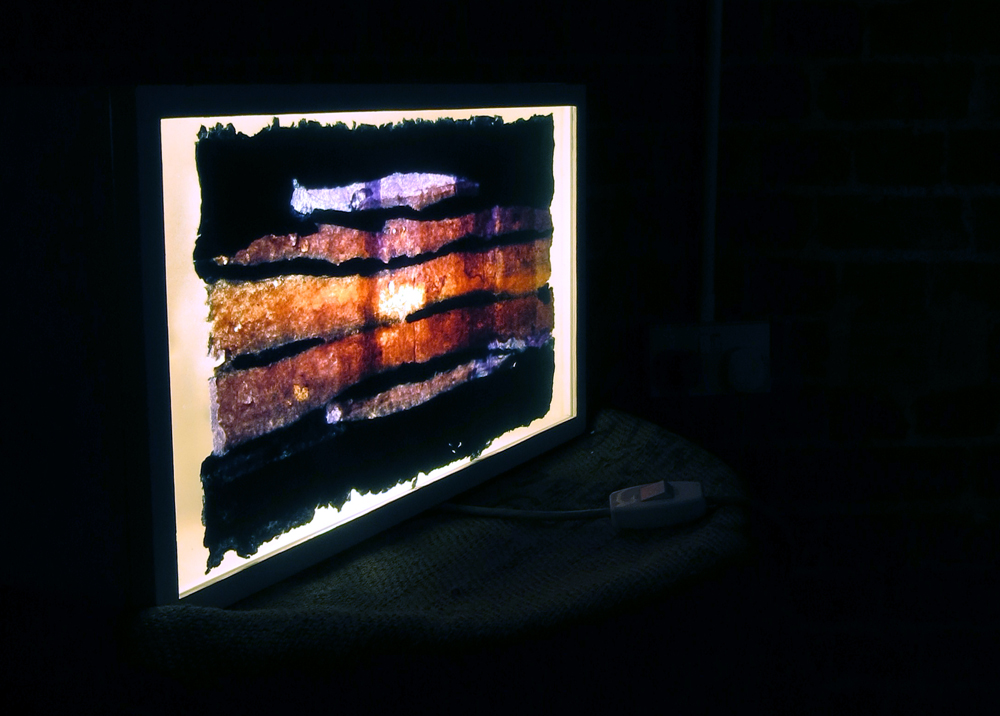
watermark 06Rising water levels – evident even along the local London canals – is the theme of a series of paper pulp works, a selection of which I’m showing at the London Canal Museum. As well as signifying the water line, the title refers to the ‘watermark’ effect incorporated in each of the paper pulp works, achieved by varying the thickness of the fibre during the making process.

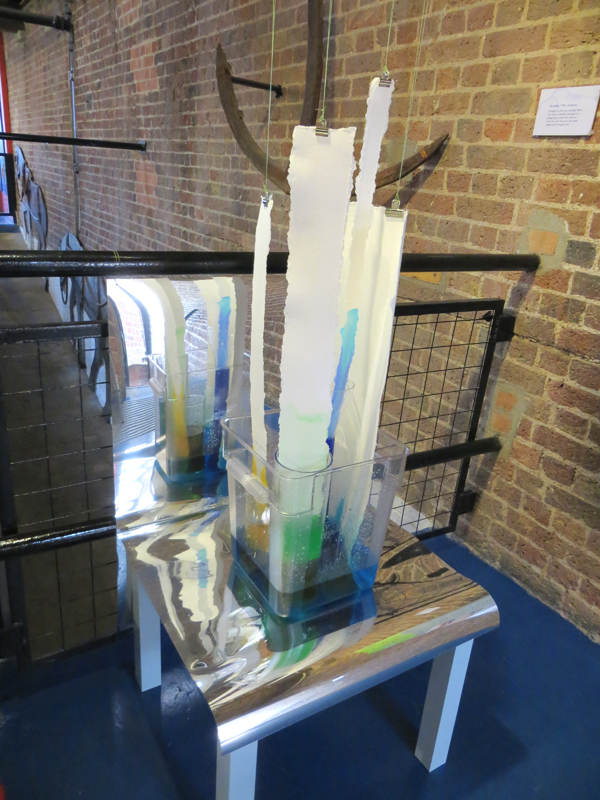
An installation of melting and dripping ice is also on show, where hanging paper becomes tinted through capillary action. The short video work, Sciogliere e ritrovare, can be seen on the ground floor.

I’ll be demonstrating techniques and running a paper-making workshop using edible plants on Sunday 28 July, 11:00 to 16:00 with the chance to make your own paper.

The exhibition continues until 31st July.

watermark 07

In queste due insallazioni  l’arte incontra la scienza.

Watermark 7 - 31 x 54 cm 2013watermark 05

I marchi d’acqua alta erano molto piu evidenti nel inverno 2012/2013 e camminando lungo il canale mi hanno portato a fare lavori su marchi nella carta che possono essere intesi in due modi – I marchi come luce e i marchi come livelli di misure nell’acqua. Presto la carta diventera privilegio.

Oltre sono esposti due altre opere, un’installazione, Acqua, colore e ghiaccio (azioni capillari) e un video installazione dove le  poesie di Frances Presley si intrecciano con il ghiaccio (climate change).

watermark 04